

TL;DR: Web design in Nigeria can cost anywhere from a few hundred thousand Naira for a simple template-based website to several million Naira for a custom website with advanced functionality. The price depends on what you’re building, who is building it, how much content and functionality it includes, and what support is included after launch.
“How much should I pay for a website?” This is one of the first questions many Nigerian business owners ask when they start looking for a web designer.
There is no simple answer because “a website” can mean very different things. It could be a one-page site with a contact button, or a fully customised e-commerce platform with payment integration, customer accounts, and other business functions.
That is also why website quotes can vary so widely. A freelancer might quote ₦150,000, while an established agency could quote ₦2,500,000 for what appears to be the same project.
Neither price is automatically right or wrong. In most cases, the difference comes down to what is included in the project.
Why Website Prices in Nigeria Vary So Much
The cost of a website usually comes down to several things: design, development, content, hosting, domain registration, functionality, and ongoing maintenance.
A lower-priced quote may cover only the initial design and development, while other costs are paid separately. Hosting and domain renewal, for example, are recurring expenses rather than one-time website costs.
The person or company building the website also affects the price. A solo freelancer generally has lower overheads than an established agency, while an agency may have separate designers, developers, copywriters, and project managers working on the same project.
That does not necessarily make one option better than the other. It simply means you need to understand what you are paying for before comparing quotes.
What Determines the Cost of a Website in Nigeria?
The price of a website isn’t just determined by the number you see on the quote. Several factors determine how much time, skill, and resources go into building it, and these can vary significantly from one project to another.
1. Number of pages and complexity
A one-page landing page is much simpler to build than a website with multiple service pages, a blog, portfolio sections, and other content.
More pages also mean more design, content, development, and testing.
2. Custom design vs. template
A website built with a pre-designed WordPress or Elementor theme will generally cost less because the basic structure already exists.
A custom website takes more time because the layouts and user experience are designed specifically around the business and its brand.
3. Functionality
A website that simply presents information is relatively straightforward.
Once you add features such as online payments, bookings, customer accounts, membership areas, inventory management, or e-commerce, the scope changes significantly.
Some of these features require custom development or integrations with third-party platforms.
4. Content
Having your copy, photographs, brand assets, and logo ready can reduce the amount of work required from your designer.
If the designer also needs to write your website copy, source images, create graphics, or develop your visual identity, those services will usually increase the project cost.
5. Who you hire

Freelancers often have lower costs than agencies because they operate with smaller teams and lower overheads.
Agencies, on the other hand, may provide project management, design, development, content, quality assurance, and post-launch support under one contract.
The important thing is to compare the scope of each quote rather than comparing the headline price alone.
What You Get at Different Price Points
Entry-Level: ₦100,000 to ₦400,000
At this level, you are generally looking at a freelancer or small studio using an existing WordPress or similar template.
A typical project may include:
- A 1- to 5-page website.
- Home, About, Services, and Contact pages.
- A mobile-responsive design.
- Basic customisation with your logo and brand colours.
- Basic on-page SEO setup.
- WhatsApp or call-button integration.
What may not be included is original copywriting, professional photography, custom illustrations, extensive SEO, or ongoing support after launch.
Some Nigerian freelance packages, for example, start around ₦150,000 for a small 1 to 3-page website, while larger packages may cost ₦300,000 or more depending on the number of pages, content, and additional services involved.
At this price point, the goal is usually to establish a professional online presence without a large upfront investment.
Mid-Tier: ₦400,000 to ₦1,500,000
This range is better suited to established small businesses and growing brands that need more than a basic online presence.
Depending on the provider and project, you may get:
- A design tailored more closely to your brand.
- 5 to 10 pages.
- Blog or resource sections.
- Content management through WordPress or another Content Management System.
- Basic technical SEO.
- Image optimisation.
- Conversion-focused page layouts.
- One or more rounds of revisions.
- Basic post-launch support.
The main difference here is not simply the number of pages. It is the amount of thought that goes into how the website works for the business.
The site may be structured around specific customer journeys, calls to action and business goals rather than simply presenting information.
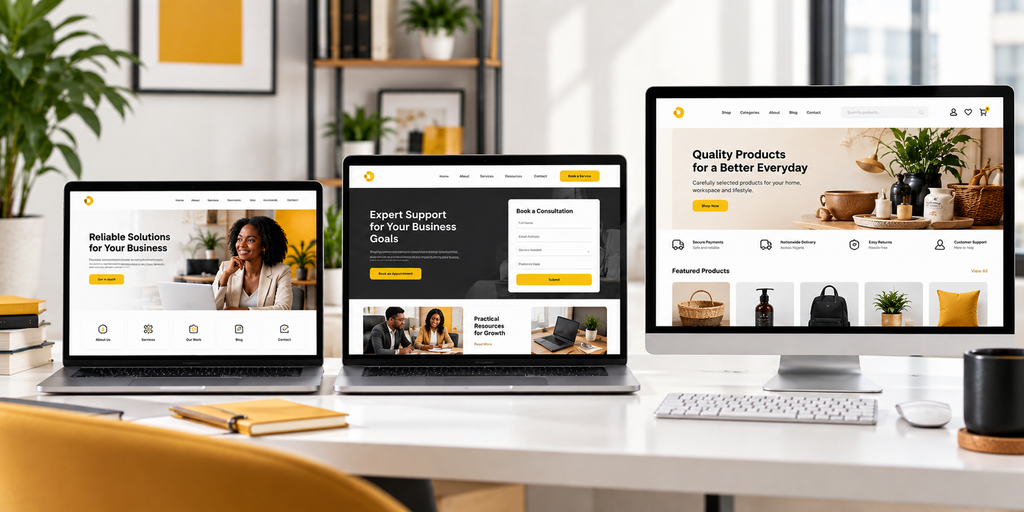
Advanced / Agency-Level: ₦1,500,000 to ₦10,000,000+
At this level, you are generally dealing with larger websites, more specialised requirements or an agency with multiple people involved in the project.
Depending on the scope, the project may include:
- Custom UX and UI design.
- Competitor and audience research.
- E-commerce functionality.
- Payment gateway integration.
- Booking or membership systems.
- Custom integrations.
- Advanced SEO architecture.
- Performance optimisation.
- Security and technical setup.
- Ongoing maintenance and support.
- Project management and structured development milestones.
The final cost can go significantly higher when the website becomes a custom web application or requires complex integrations.
This type of investment may make more sense for businesses where the website plays an important role in sales, customer management or service delivery, particularly in sectors where trust and credibility are important.
The Costs That Are Easy to Overlook
The initial website quote is not always the total cost of owning a website.
Hosting and domain renewal
Your domain and hosting usually need to be renewed after the initial registration or hosting period.
The amount you pay depends on the domain extension, hosting provider, server type, traffic and resources your website requires.
Content updates
Your website may need changes after launch. Prices, services, team members, contact details and other information can change as the business grows.
Some developers include a maintenance period or monthly support package. Others charge separately for every update.
It is worth clarifying this before the project begins.
How to Choose the Right Website Package
Before requesting quotes, get clear about what the business actually needs.
Ask yourself:
- Do I need a simple informational website, or will customers need to make bookings or payments?
- How many pages do I realistically need at launch?
- Do I already have my copy, images, logo and brand assets?
- Will I need e-commerce, forms, bookings or other integrations?
- Who will update the website after launch?
- What will hosting, maintenance and future updates cost?
These questions make it much easier to compare proposals.
It is also worth paying attention to the questions a web designer asks you.
A good provider should want to understand your business, audience, goals and requirements before giving you a final quote. If someone gives you a price without asking much about the project, make sure you understand exactly what that price covers.
Conclusion
There is no single “fair price” for a website in Nigeria because websites are built for different purposes.
A small business may only need a simple, well-designed website that makes it easy for customers to find its services and contact the business. Another company may need e-commerce, payment processing, integrations and a more sophisticated digital experience.
The right approach is to define what you need first, then compare quotes based on scope rather than price alone.
A ₦200,000 website and a ₦2,000,000 website may both be described as “a five-page website,” but that does not mean they offer the same design process, functionality, content, technical setup or support.
At Corporately Lucid, we build websites for businesses at different stages, from lean websites for small businesses to more customised, SEO-ready platforms for growing brands and businesses in sectors such as finance and legal services.
Our proposals break down the major components of the project, including design, development, content and ongoing maintenance, so you can see what you are paying for before making a decision.
If you are unsure what type of website your business actually needs, book a discovery call with us and we can help you scope the project before you commit to a package.
Frequently Asked Questions
How much does a website cost in Nigeria?
Website costs in Nigeria can range from around ₦100,000 for a simple template-based website to ₦10,000,000 or more for a custom website, e-commerce platform or web application. The actual cost depends on the project’s scope, functionality, content and provider.
Is a cheap website a bad investment?
Not necessarily. A low-cost website can make sense for a small business that needs a simple online presence. The important question is whether the website meets your current needs and whether its limitations will become a problem as the business grows.
What’s the difference between a template website and a custom-designed website?
A template website starts with an existing design that is adapted to your brand. This usually makes it faster and more affordable to build.
A custom-designed website is created around your brand, audience and requirements. It generally takes more time and costs more, but gives you greater control over the design and user experience.
Does the initial website price include hosting and maintenance?
Not always. Hosting and domain registration or renewal are usually separate recurring costs, while maintenance and content updates may also be charged separately.
Always ask what is included in the initial quote, how long the support period lasts and what you will pay for hosting, renewals and future updates.